Try K-Saju Yourself: What Battle of Fates Contestants Are Actually Reading
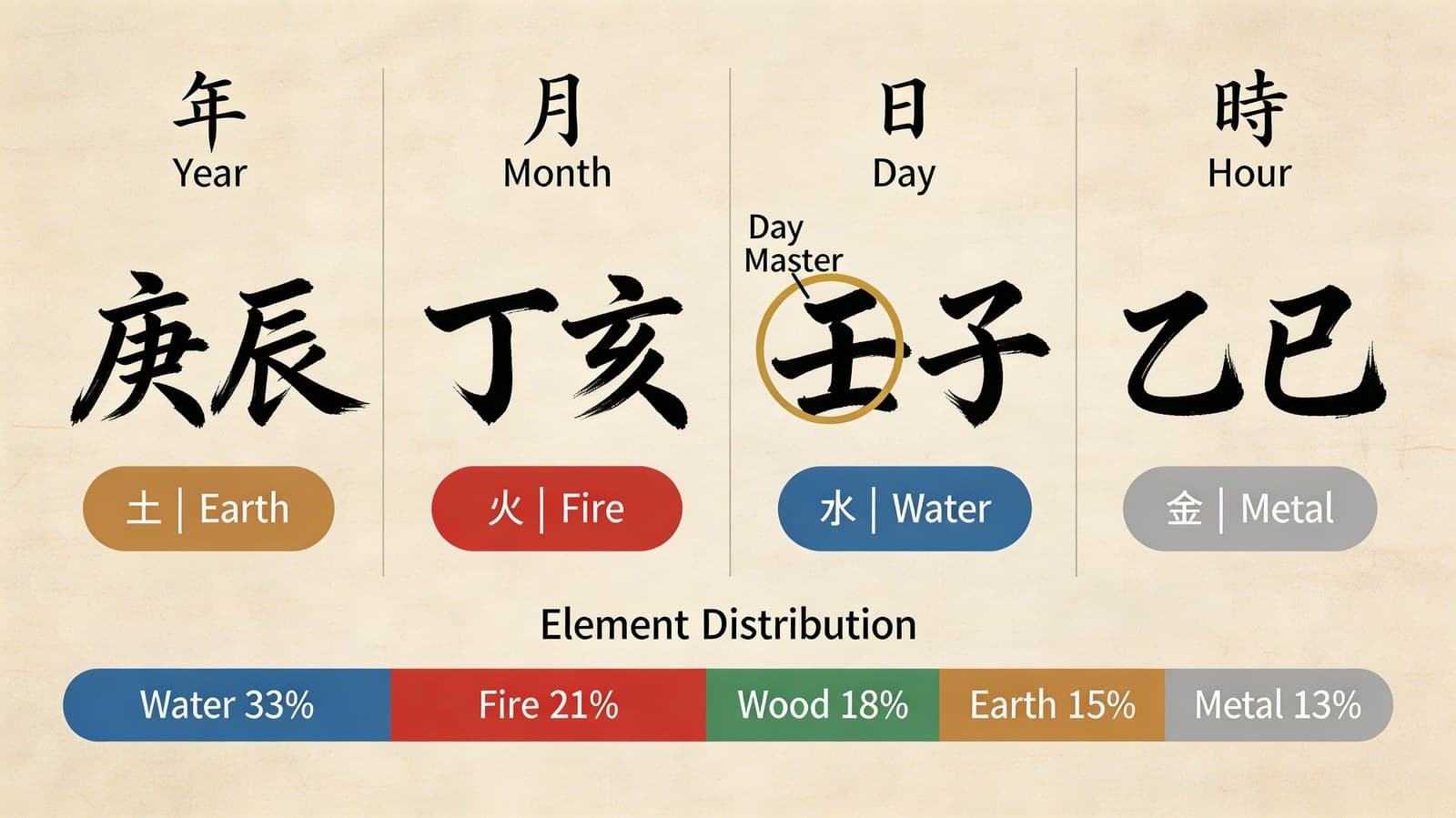
The masters on Battle of Fates aren't reading your energy. They're reading a chart — eight characters derived from your birth data. Here's how to see yours in under a minute.
Battle of Fates contestants keep talking about water types, fire types, metal energy. But nobody on the show tells you how to find yours. Here's what they're actually looking at.
There's a moment in Battle of Fates that keeps repeating itself. A contestant sits across from a stranger, studies them for a beat, and says something like: "You're a water person. Strong water. That's why you feel everything so deeply but can't always hold onto what you've built."
The stranger tears up. The audience leans forward. The judges scribble notes.
And somewhere at home, a viewer thinks: wait, how did they know that? And what am I?
That question — the second one — is the thing the show never answers. Forty-nine fate readers, twelve elimination rounds, hours of footage. And almost no explanation of how any of it actually works. (If you're curious why the show is structured that way — and what it gets wrong about saju in the process — {{LINK: "this" → 여기에_URL: /blog/battle-of-fates-gets-saju-backwards}} is worth reading first.)
So here's how it works.
Every saju reading — every one, including whatever those masters are doing on camera — starts with the same thing: eight characters derived from your birth date and time.
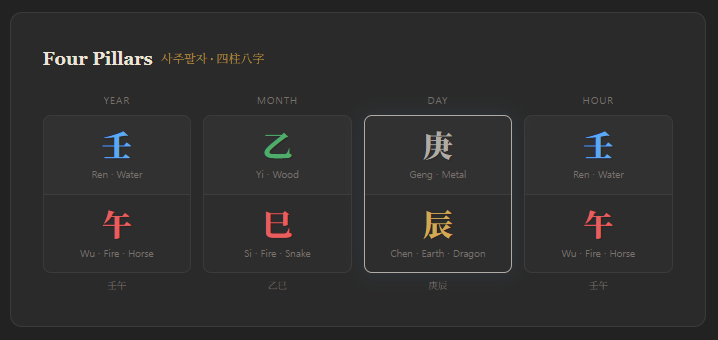
In Korean it's called saju palja (사주팔자). Saju means four pillars. Palja means eight characters. Four pillars, two characters each: year, month, day, hour. That's the structure. You might also know this as BaZi, or Four Pillars of Destiny — same system, Chinese origins, refined over roughly fifteen centuries before Korea made it something distinctly its own.
The eight characters map your birth moment onto a sixty-unit cycle of symbols drawn from Chinese cosmological tradition. Each character carries an elemental quality — Wood, Fire, Earth, Metal, Water — and a yin or yang charge. The interactions between them are what a practitioner reads.
There are no "better" characters. No zodiac tier list. Just a particular elemental distribution that describes the conditions you arrived into.
Of the eight characters in your chart, one carries more weight than the rest: the heavenly stem of your day pillar.
This is your day master (ilgan, 일간 in Korean). It represents your core self — not your personality as shaped by circumstance, but the underlying element that everything else in your chart orbits around.
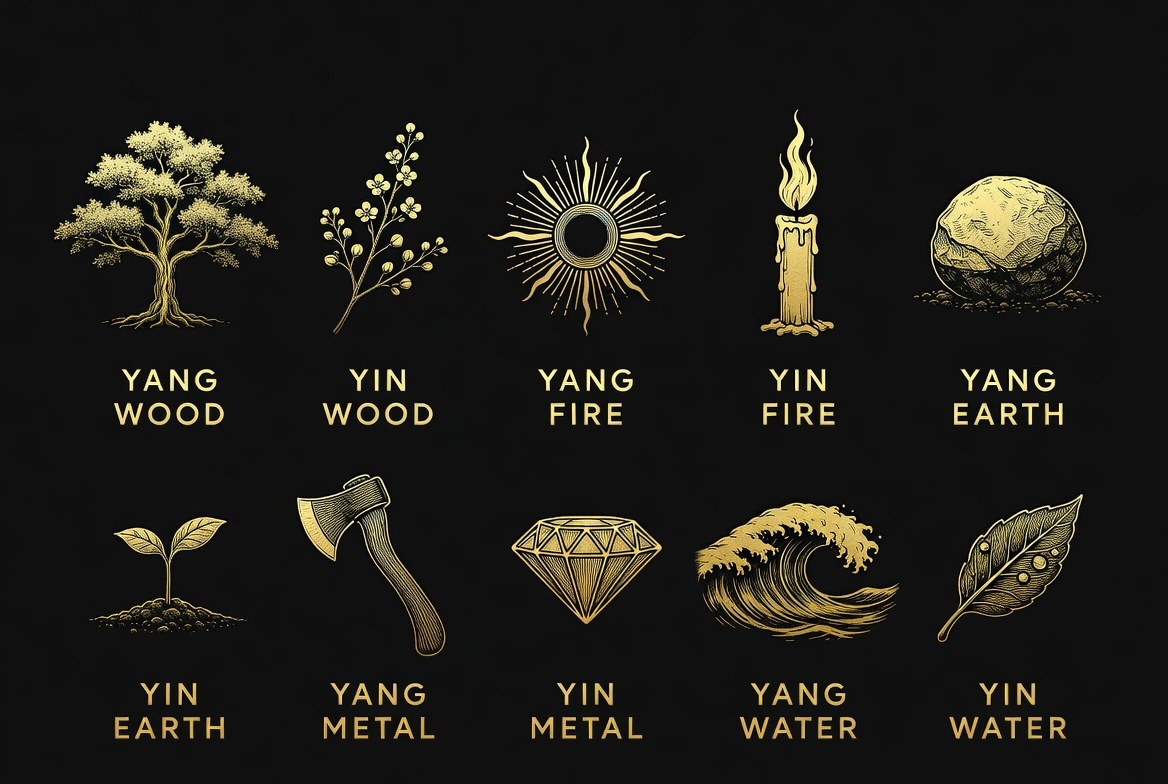
There are ten possible day masters. Five elements, each in yin and yang form:
When a Battle of Fates contestant says someone is "a water person," this is what they mean. They've identified the day master and they're reading from there.
Here's where it gets interesting — and where the show, in its rush to manufacture drama, can't really go.
Your day master is not a personality type. It's a starting condition. What determines how that element actually expresses in your life is everything surrounding it: the other seven characters, the relationships between them, whether your element is supported or overwhelmed, and which decade-long luck cycle you happen to be inside right now.
Two people can both be 壬 Water (Yang) — the ocean type — and have completely different lives, relationships, and struggles. One has strong Wood in their chart, which means the water has somewhere to go: energy flows out, creativity gets channeled, things actually get built. The other has too much Water with nowhere to drain, which can look like intelligence without direction, or sensitivity that turns inward and stagnates.
The analogy I keep reaching for is coffee. Two people order an Americano. Same base. But one adds milk, one adds sugar, one drinks it straight, one lets it go cold. Same origin, different experience.
The show's practitioners know this. You can see it in how the good ones slow down, ask questions, sit with the chart before they say anything. The ones who blurt out "fire energy, definitely fire" in thirty seconds are either remarkably talented or performing for the cameras. Probably the latter.

There's something slightly uncomfortable about the day master system, which is that it's not really a Western self-discovery framework at all.
Western personality typing — MBTI, the Big Five, enneagram — tends to be descriptive and relatively static. You answer questions, you get a type, the type reflects how you already see yourself. The feedback loop is internal.
Saju works differently. The day master describes your original nature, before personality formed around it. And the rest of your chart describes the pressures, supports, and tensions that shaped how you grew. A practitioner is reading the gap between your original element and the conditions it encountered — which often explains things about you that you can't easily account for.
Which is maybe why the show's subjects keep crying. Not because someone told their fortune. But because someone described them accurately from the outside.
That's a different thing. And it hits differently.

The day master is where you start. But it's not where a reading ends.
On top of your fixed birth chart, saju practitioners read two time-based cycles: the daewoon (대운), a decade-long major luck period that shifts roughly every ten years, and the sewoon (세운), the yearly cycle. These cycles bring different elements into relationship with your fixed chart — some harmonious, some antagonistic, some that activate dormant potential you didn't know was there.
This is what Battle of Fates almost never has time to address, because it takes too long to explain for a competition format. A ten-minute segment can show you someone's elemental type. It can't really show you someone's life arc.
But it's often the most practically useful piece of a reading. Not "who are you at the core" but "what kind of season are you in right now, and what does it call for?"
Some seasons are for expanding. Some are for consolidating. Some are genuinely hard — not because you did anything wrong, but because the elements in your current cycle create friction with your core chart, and that friction demands something of you. Knowing which season you're in doesn't change the season. But it changes how you move through it.
If you've been watching Battle of Fates and wondering what the practitioners are actually looking at — this is it. Not intuition, not psychic ability. A system. A very old one, applied by someone who's spent years learning what the symbols mean.
At Qiora, you can see your own chart: your day master, your elemental distribution, the major luck period you're currently in. The same framework the show's contestants are working with, without the elimination pressure and the countdown clock.
Find out which of the ten you are.
Takes less than a minute · No signup required
Saju readings are meant for self-reflection and personal growth — not as a substitute for professional financial, medical, or legal advice. Your choices always shape your life more than any chart can.
The masters on Battle of Fates aren't reading your energy. They're reading a chart — eight characters derived from your birth data. Here's how to see yours in under a minute.

The show's tagline asks: can anyone truly read your fate? It's a better question than the show is equipped to answer. Here's what a saju practitioner actually thinks.
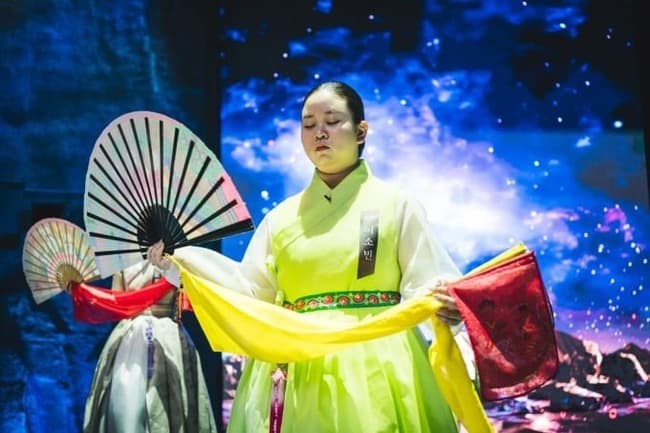
Lee So-bin's 2008 prophecy became legend. But what the shamans on Battle of Fates do and what saju masters do are two very different things — and that difference matters.