Try K-Saju Yourself: What Battle of Fates Contestants Are Actually Reading
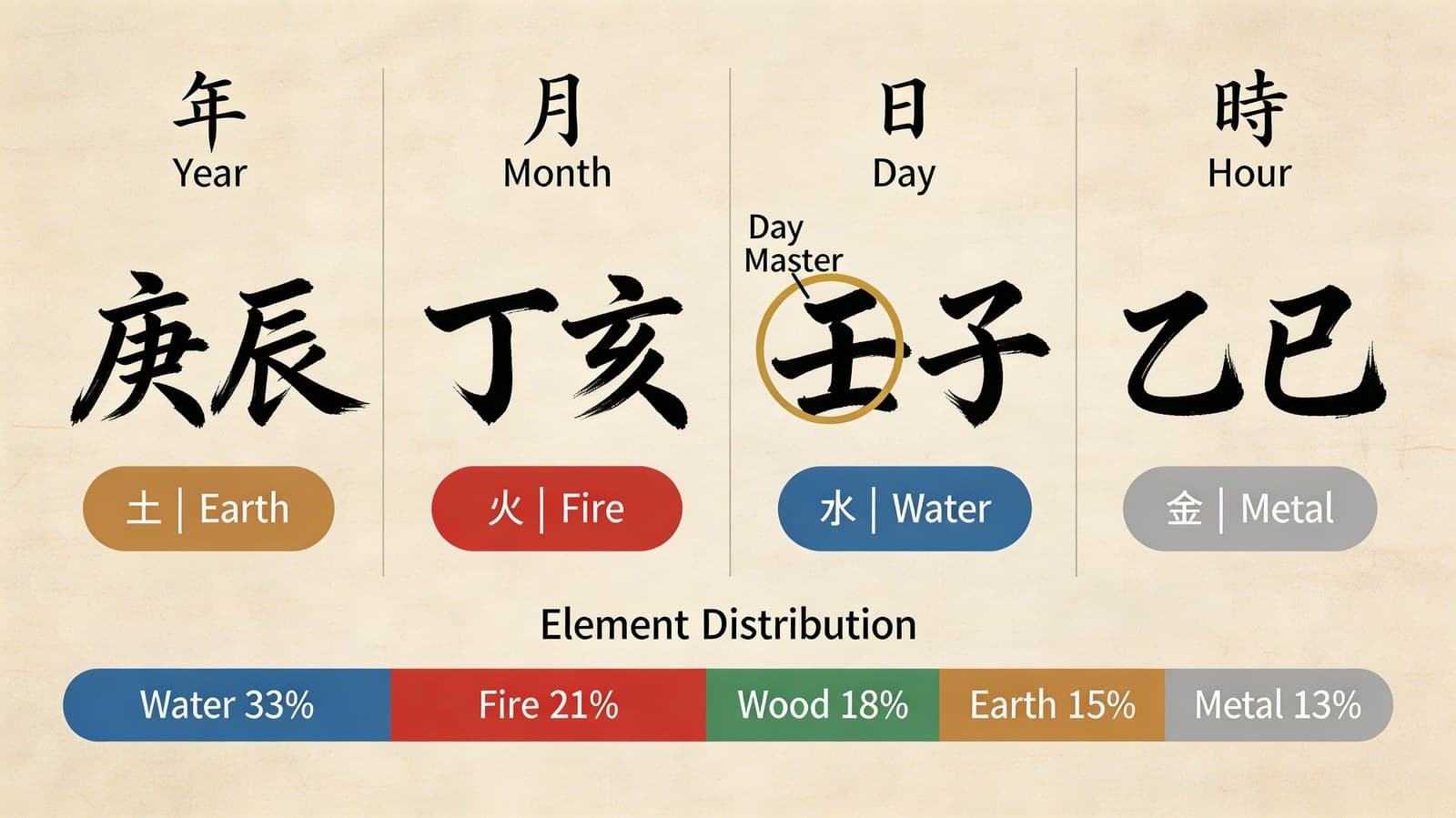
The masters on Battle of Fates aren't reading your energy. They're reading a chart — eight characters derived from your birth data. Here's how to see yours in under a minute.
Lee So-bin's 2008 prophecy became legend. But what the shamans on Battle of Fates do and what saju masters do are two very different things — and that difference matters.
In 2008, a nine-year-old girl appeared on a Korean variety show called Star King and looked at rapper MC Mong across a studio stage.
"You have committed a death penalty offense," she said. "You must beg forgiveness from your family. From your mother."
MC Mong laughed. The host laughed. The audience laughed — nervously.
Two years later, MC Mong's broadcasting career collapsed under allegations of deliberately extracting healthy teeth to avoid mandatory military service. The internet went back to that clip immediately. The comments filled up. The child shaman's prophecy, people said, had come true.
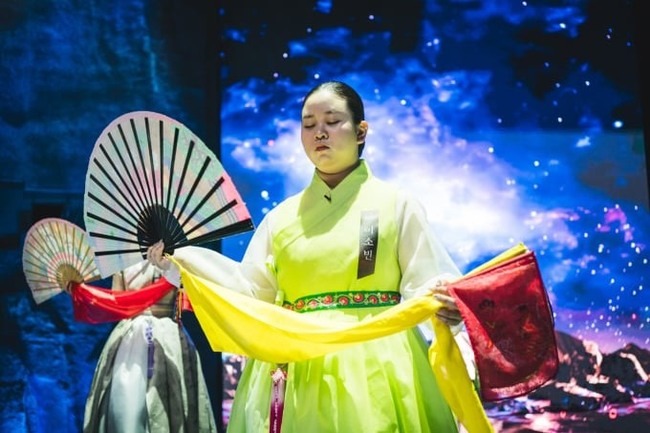
That child was Lee So-bin. She's 26 now, runs a shrine in Ansan, and walked into the Battle of Fates set this February and made the room go quiet.
Let's be honest about why that story sticks. It's not just that she said something vague that later fit — the way horoscopes often work, where the prediction is broad enough to land on anything. She said something specific. About moral failing. About consequences. About family. And then, two years later, something that fit that description actually happened.
That's not nothing.
The question it raises — the one Battle of Fates is essentially built on — is whether what Lee So-bin does is a real capacity, or an extraordinary coincidence that our pattern-hungry brains have assembled into a narrative. Eighteen years later, there's still no clean answer. Make of that what you will.
But here's the thing that doesn't get discussed enough: what Lee So-bin does and what the saju masters on the same show do are not the same thing. They're not even in the same category. We wrote about this gap — between what the show presents and what saju actually is — here
Battle of Fates groups its 49 contestants into four disciplines: shamanism, saju, tarot, and face reading. The show treats them as variations on the same basic capacity — reading fate — and pits them against each other in the same missions.
That framing is convenient for television. It's not accurate.
Shamanism (musok, 무속) in the Korean tradition is about direct spiritual connection — a practitioner who has undergone sinnaeryim (신내림), the ritual process of receiving a deity, and claims access to information through that channel. When Lee So-bin looked at MC Mong and said what she said, she wasn't running a calculation. She was reporting what she perceived through a channel that can't be independently verified or replicated.
Saju is something else entirely. It's a calculation system. You take a birth date and time, convert it into eight characters using a deterministic algorithm that has been largely standardized over centuries — though minor differences persist across eras and schools, particularly around details like the exact timing of seasonal transitions. Then you read the relationships between those characters using an established interpretive framework. Two competent practitioners given the same birth data will produce charts that are identical. The interpretation may vary — there's real craft and judgment in that — but the underlying data is objective and reproducible.
One of these is a claim about spiritual perception. The other is a claim about pattern recognition applied to structured data.
Watch the saju practitioners on Battle of Fates when they're working. The good ones ask for a birth date and time before they say anything. Then they go quiet for a moment. Then they start talking about structural tendencies — not "you will have financial difficulties" but "your chart shows a configuration where the dominant element creates friction with your day master in certain cycles." Your day master, by the way, is the single character that represents your core self — the anchor point from which the entire chart is read.
It sounds less dramatic than what the shamans are doing. It is less dramatic. That's sort of the point.
One of the show's saju contestants — "Business Kim Dosa," as viewers call him — is a former IT developer who practices saju as a second career. Which is, when you think about it, exactly the kind of background that saju rewards. The system is genuinely complex, genuinely computational, and genuinely demanding of the kind of mind that can hold multiple interacting variables and track how they shift over time.
But competition television structurally can't demonstrate what saju actually does well. Because saju isn't about getting things right in real time under pressure. It's about sitting with a chart, understanding the relationships within it, and helping someone recognize patterns in their own life that they're too close to see clearly. The reading is a collaboration, not a performance.
Lee So-bin's 2008 moment was a performance, in the best sense — one that turned out, years later, to have been uncannily accurate. Whether that's evidence of real spiritual perception or a remarkable coincidence processed through the lens of retrospect, I genuinely don't know. Nobody does.
What I do know is that saju doesn't ask you to resolve that question. It offers a different kind of tool entirely — one that starts with your birth data and builds a structural description of your elemental makeup, your tendencies, your current cycle. No spiritual channel required. A thousand years of refinement across multiple schools and traditions, all converging on the same basic architecture.
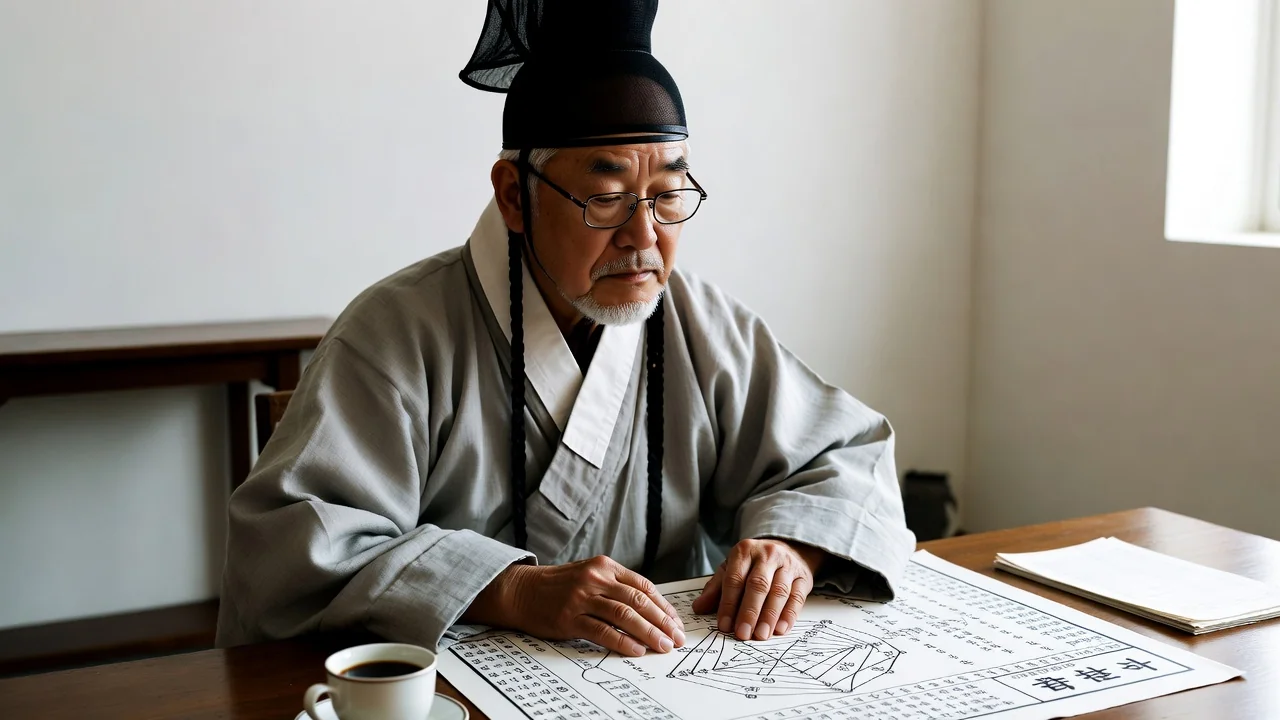
If the show made you curious about the saju piece specifically — the data-driven, calculation-based piece — you can start with your own chart at Qiora.
Enter your birth date and time. Get your eight characters. Find your day master. See which elements dominate your chart and which are scarce, and what your current decade-long luck cycle is bringing into contact with your fixed chart.
No spiritual channel. No competition format. Just the system, applied to you.
Whether it tells you something true — that part, as always, is yours to judge.
Takes less than a minute · No signup required
Saju readings are meant for self-reflection and personal growth — not as a substitute for professional financial, medical, or legal advice. Your choices always shape your life more than any chart can.
The masters on Battle of Fates aren't reading your energy. They're reading a chart — eight characters derived from your birth data. Here's how to see yours in under a minute.
The show's tagline asks: can anyone truly read your fate? It's a better question than the show is equipped to answer. Here's what a saju practitioner actually thinks.
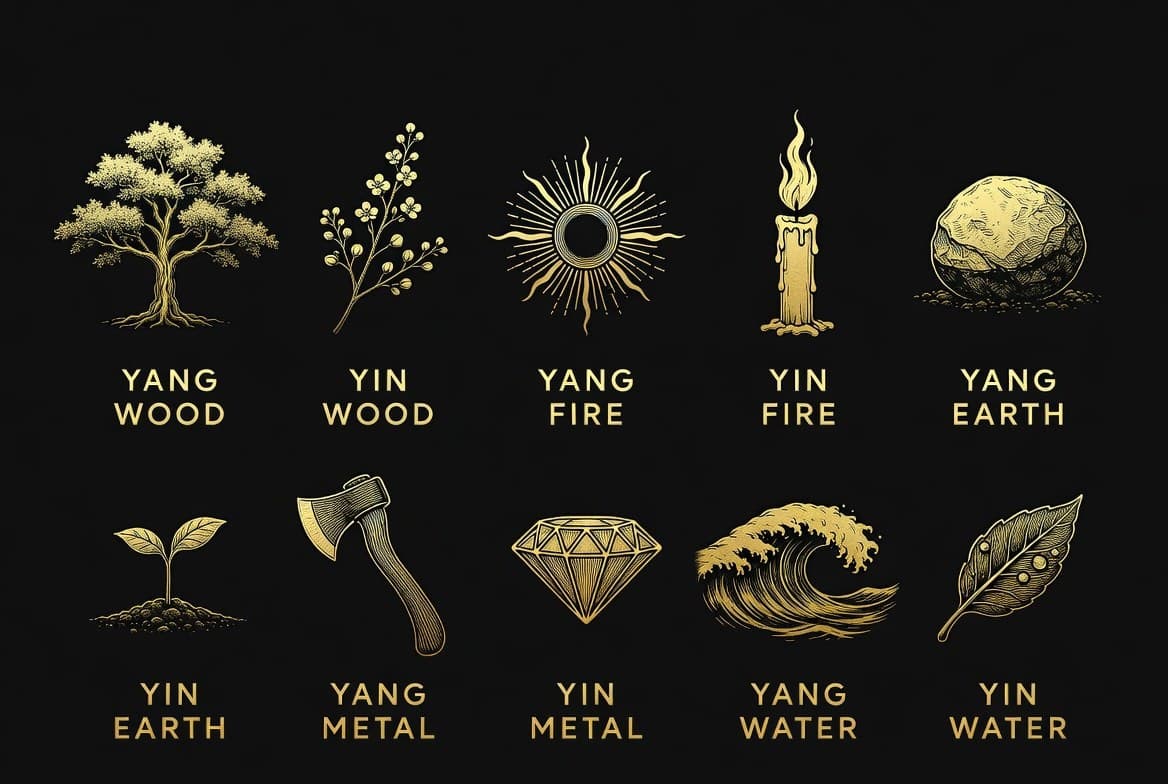
Battle of Fates contestants keep talking about water types, fire types, metal energy. But nobody on the show tells you how to find yours. Here's what they're actually looking at.