
Everything Works Around This Person? 3 Signs From Your Saju Chart
If life only seems to move when one person is beside you, it may not be your imagination. Saju calls this kind of relationship a generating connection.
They are not refusing to change out of stubbornness. They have gone rigid because they are trying not to collapse.

Qiora Saju Love Q&A · Part 4
They may not be ignoring you. In Saju, the Korean practice of reading a birth chart, people who resist change often have plenty of Earth in their chart. Earth stays, gathers, and holds things in place. When there is a lot of it, keeping things as they are feels safer than changing them.
You have said it clearly. Text me if you will be late. Do not disappear after an argument. They agree, improve for a few days, then slide back. Eventually, repeating yourself makes you feel like the nag in a conversation you never wanted to have.
The five elements, Wood, Fire, Earth, Metal, and Water, offer a more precise explanation than simple stubbornness. Earth is the energy that settles, accumulates, and supports what stands on it.
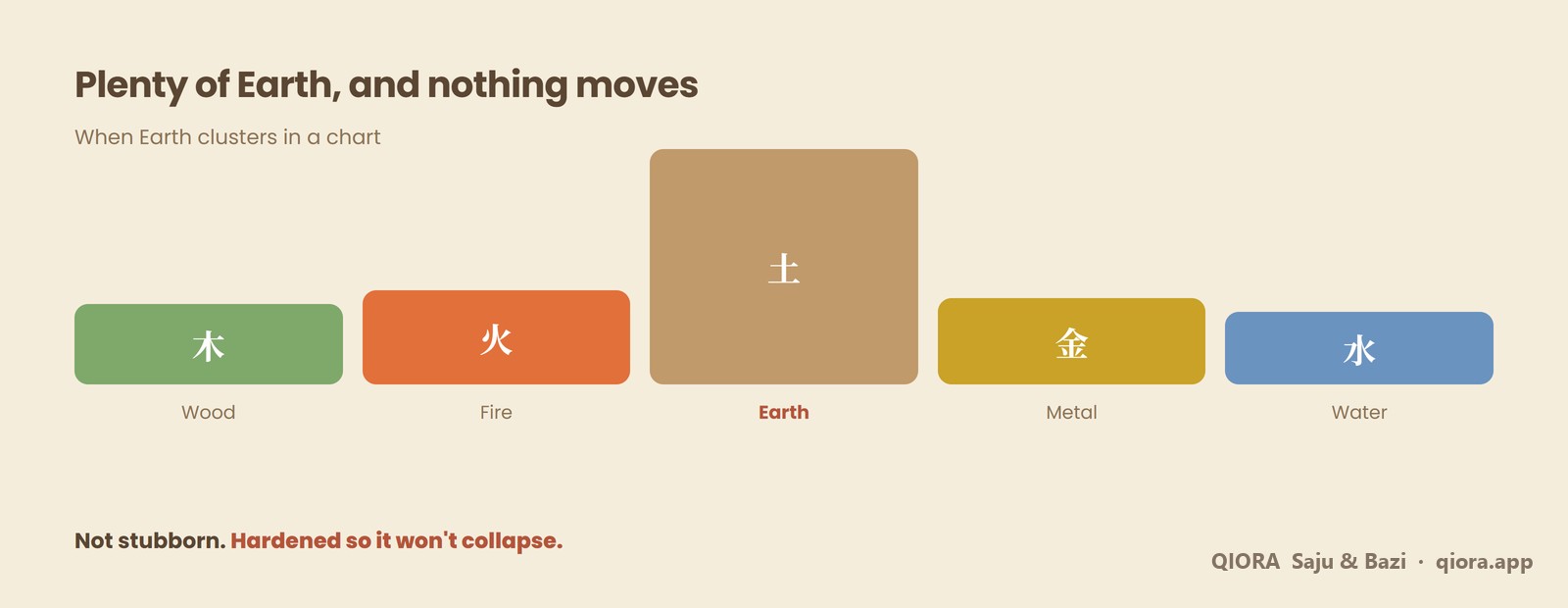
Having plenty of Earth means that several of the eight characters in a birth chart are Earth, or that the season and chart positions add more Earth to the mix. That Earth becomes the ground beneath everything else. It helps explain why this person keeps promises, stays put, and does not leave when things get difficult.

The usual restaurant. The weekend routine. The time you call each night. These small repetitions tell this person that the relationship is intact. Familiarity is not boredom to them. It is the foundation.
So when you say, "Let's change this for the sake of our relationship," the two of you hear different sentences. You are proposing something better. They hear a verdict that the way they have cared for the relationship until now was wrong. If the time you built together suddenly feels dismissed, defense comes before understanding.

Earth does not like collapse. Firm ground holds up homes and the people inside them, but dig out one side too quickly and everything nearby can shift. A person with plenty of Earth tends to calculate what else might move before agreeing to change one thing.
Bring up living together, and they may immediately ask about neighborhoods, commute times, and rent. That does not mean romance is missing. Love and daily life are not separate in their mind. They need to secure the practical cracks that might appear after the decision before they can trust the decision itself.
Earth does not change like Fire. It absorbs rain, gets pressed down, cracks, and slowly becomes something different. From the outside, it can look fixed in the same spot while a long calculation is happening underneath.
After your last argument, the apology was still clumsy, but they answered sooner. They missed the agreed time again, but this time they texted before they were late. Against the complete change you hoped for, that looks painfully small. By their measure, a piece of packed ground has moved.
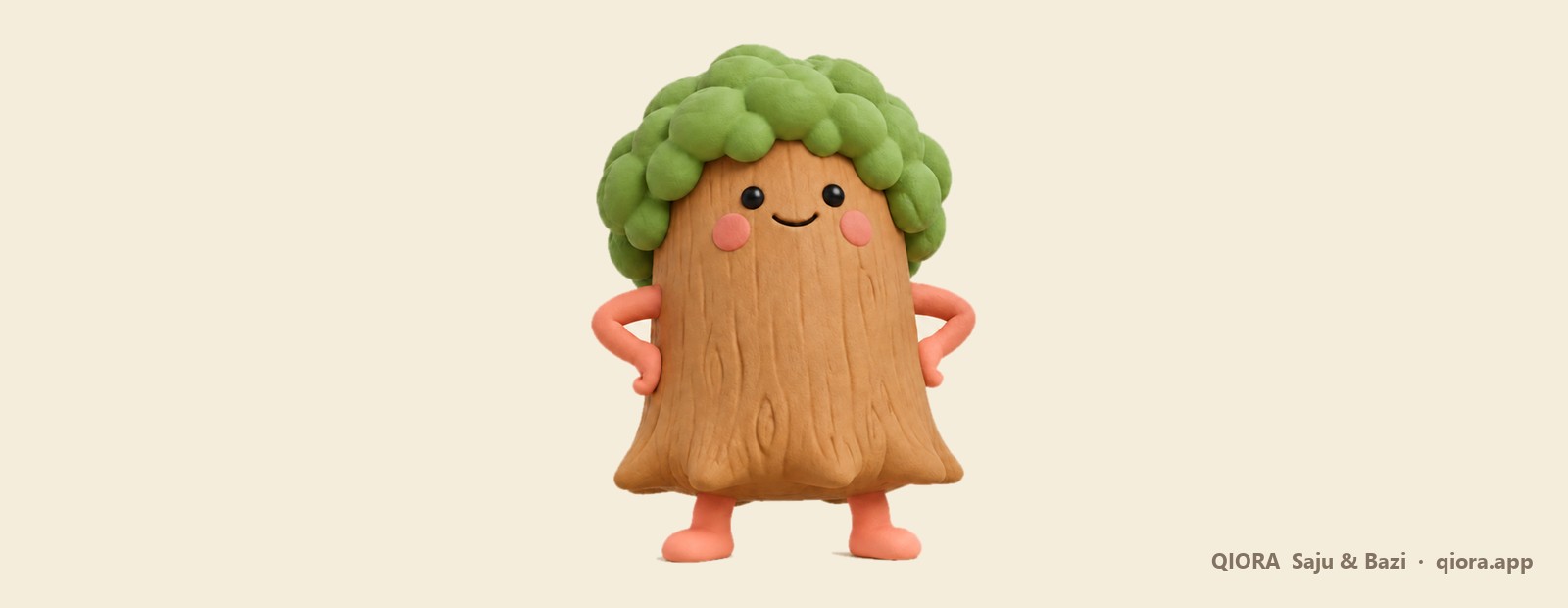
Yes. The five elements include a relationship called Wood overcoming Earth. It is often described as a clash, but it is not only about one force defeating another. Wood can make hardened ground move. It creates an opening where nothing seemed able to shift.
Roots do not overturn hard soil in one blow. They find a narrow gap, make room for water, and widen the same opening over time. "Be different from now on" gives this person nowhere to begin. "If you will be late, text me ten minutes before" gives them one clear action. When they do it, name what changed: that small act made the relationship feel safer. Once that experience accumulates, change stops meaning collapse and starts becoming a new kind of stability. People rarely move because someone pushes harder. They move because a small root keeps reaching the same place.
So what does your own chart hold? See your five elements
If life only seems to move when one person is beside you, it may not be your imagination. Saju calls this kind of relationship a generating connection.

Most people open a compatibility report, read the summary, and close it. The summary is the least useful part. Here is what the rest of it is actually telling you.

A gunghap reading gives two people one result. But the two of you are not standing in the same place, and the classical structure has always known which one of you is which.