Try K-Saju Yourself: What Battle of Fates Contestants Are Actually Reading
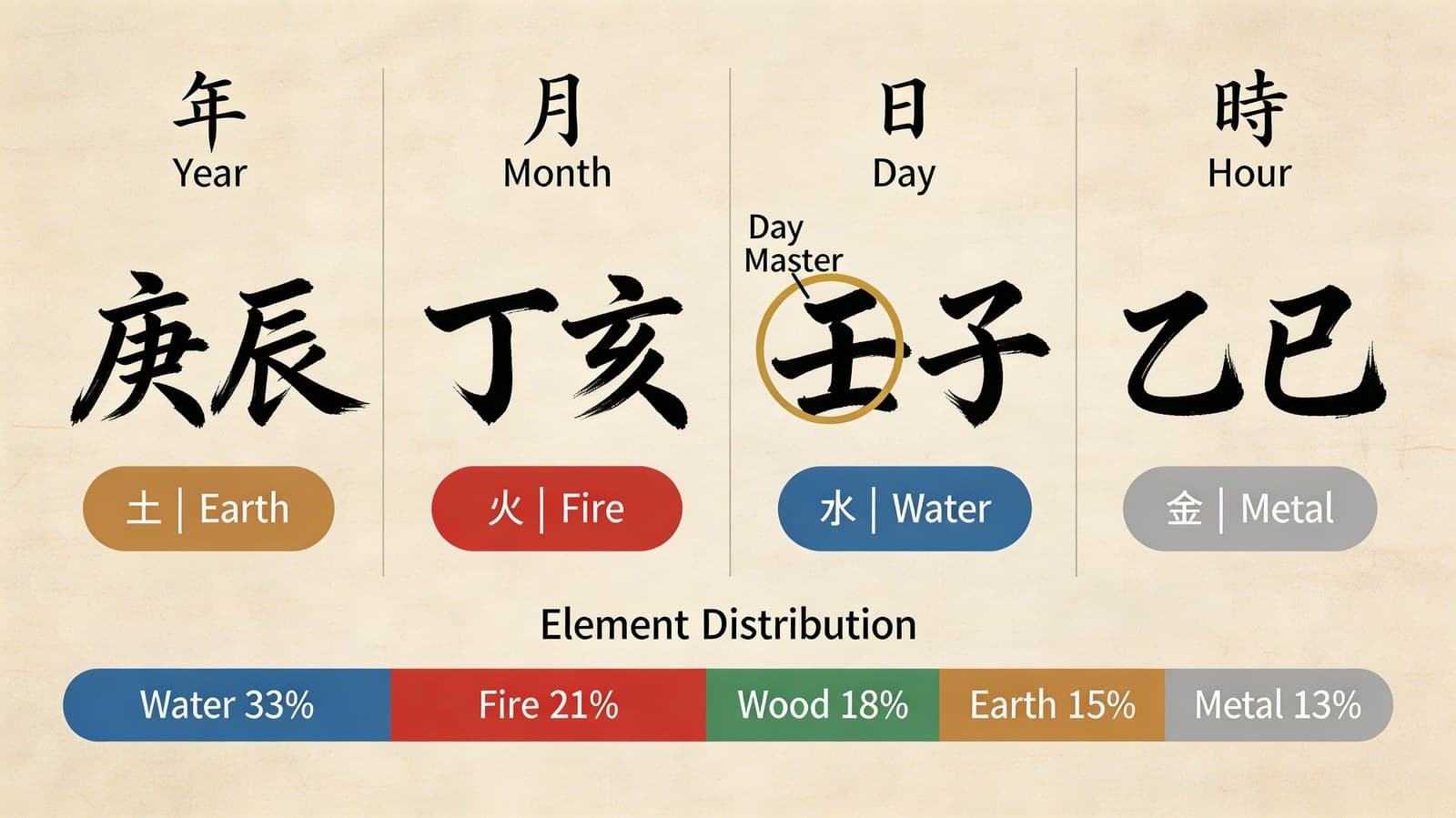
The masters on Battle of Fates aren't reading your energy. They're reading a chart — eight characters derived from your birth data. Here's how to see yours in under a minute.
Western astrology and Korean saju both start at your birth moment — but they're asking completely different questions. One groups you with millions. The other finds just you.
Ask someone their sign and they'll tell you immediately. Scorpio. Sagittarius. Capricorn. No hesitation, no follow-up questions needed. The zodiac is one of those systems that's been so thoroughly absorbed into casual culture that even people who roll their eyes at astrology know their sun sign.
I'm not here to argue with that. The zodiac has been around for a long time, and the fact that it's still the first thing millions of people reach for when trying to understand themselves or someone else says something real about its staying power.
But there's a question worth asking: what is your sun sign actually telling you?
Here's where Western astrology and Korean saju — also known as BaZi, or Four Pillars of Destiny — start from the same place: your birth moment matters.
Both traditions hold that the conditions present at the exact time you arrived in the world describe something true about you. Not everything about you. Not your destiny in some fixed, unalterable sense. But your elemental makeup — the particular distribution of forces you carry as a result of when you were born.
That's a meaningful philosophical agreement across two traditions that developed independently, thousands of miles apart, with no meaningful cross-influence until very recently. Worth noting.
Where they diverge is in what they look at, and how finely they look at it.
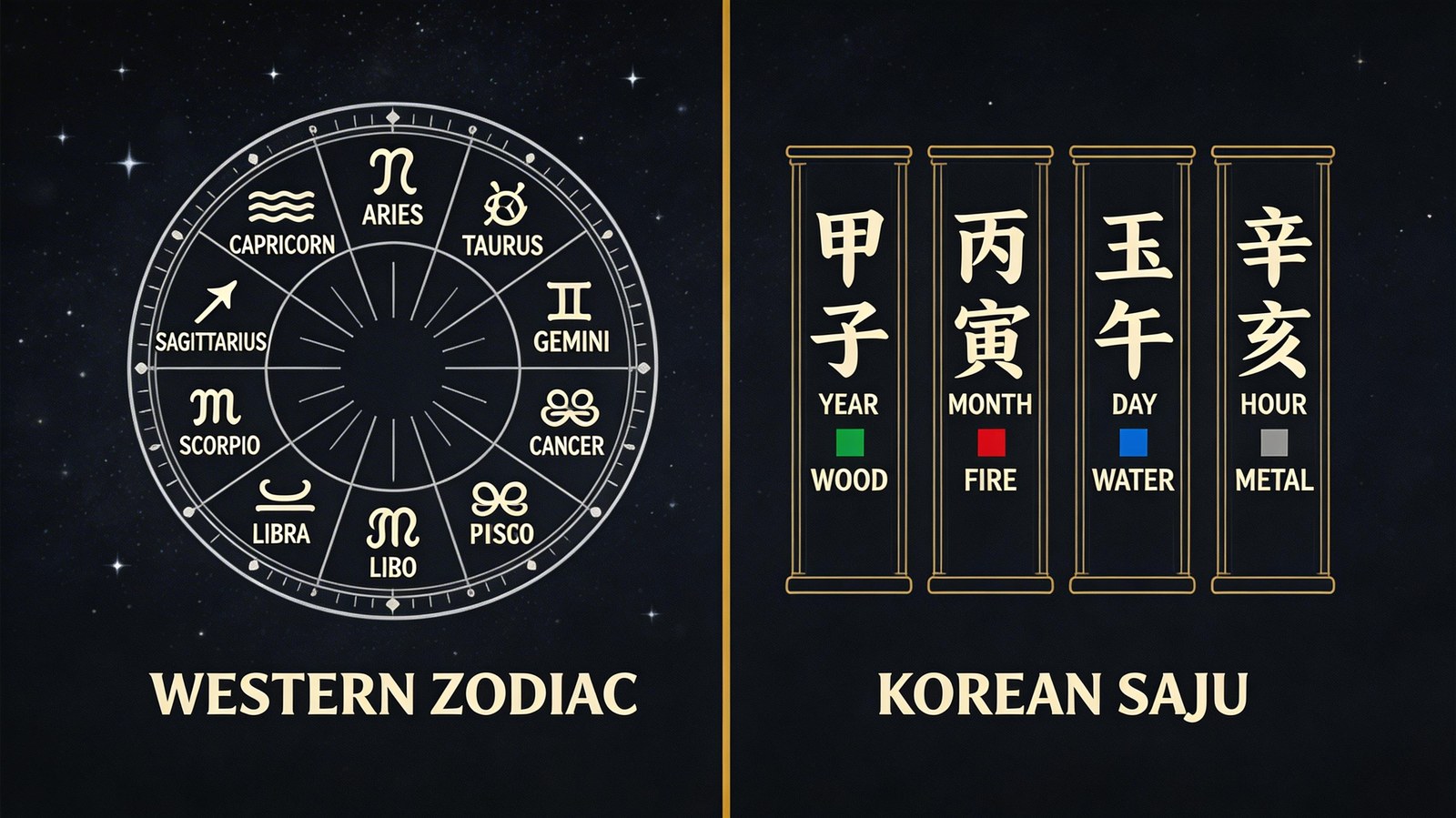
Western sun sign astrology groups people by birth month. Roughly thirty days, twelve groups: you're a Scorpio if you were born between late October and late November. That's somewhere in the range of 650 million living people sharing your sign. More if you count Scorpio risings. More still if you count everyone who's ever been born under it.
That's not a flaw, exactly. It's a feature of a system designed to be accessible and broadly applicable. The zodiac gives you a usable frame quickly, without needing a precise birth time or a specialist to interpret the results.
Saju works differently. Your chart is built from four pillars — year, month, day, and hour — each with two characters. The core of the chart, the thing that functions most like your "sign," is the day master (ilgan, 日干): the element assigned to the specific day you were born, within a sixty-day cycle. There are ten possible day masters — here's what each means.
Sixty days, not thirty. And that's just the starting point — layered on top of it are the month pillar, year pillar, and hour pillar, each adding more specificity. The total number of distinct chart combinations in saju is 518,400. Not twelve.
This isn't to say saju is more accurate. It's to say it's operating at a different resolution. The zodiac is a wide-angle lens. Saju is something closer to a close-up.
Here's where it gets philosophically interesting.
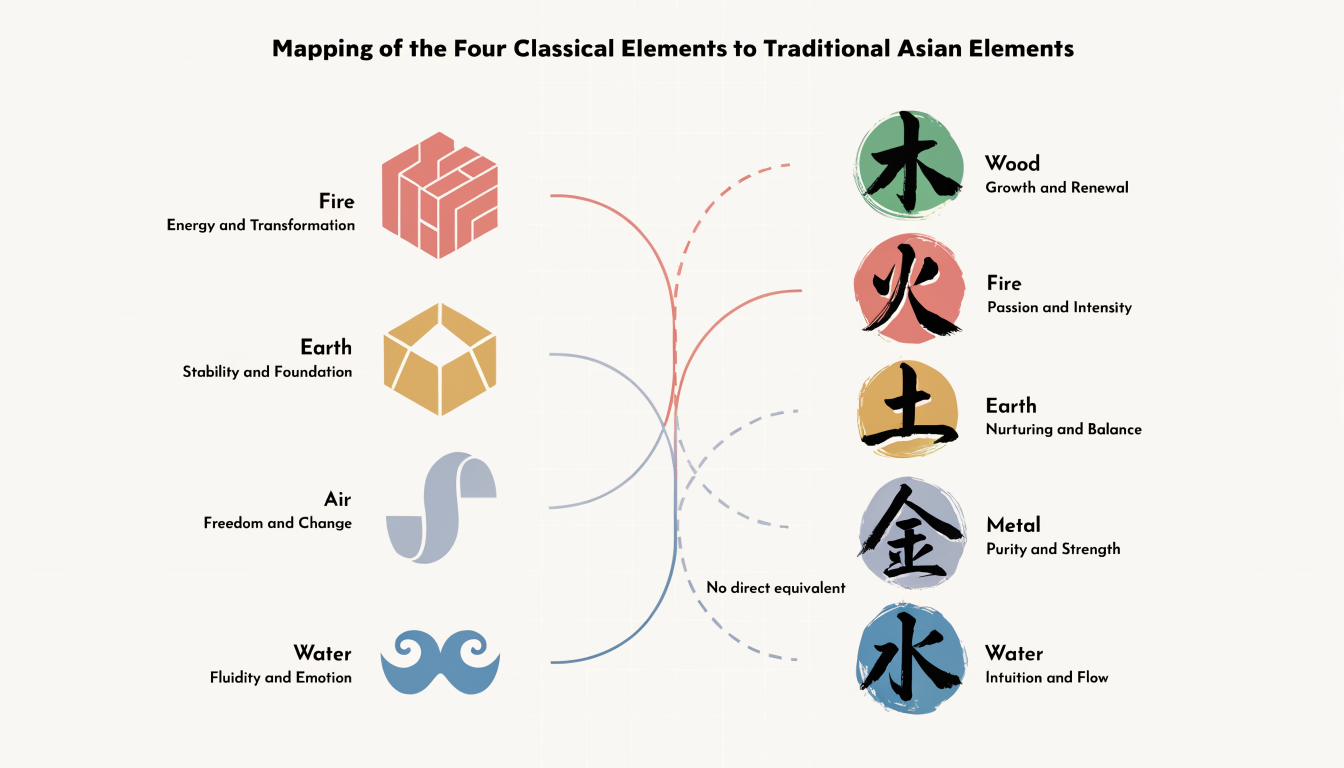
Western astrology organizes the twelve signs around four classical elements: Fire, Earth, Water, and Air. Aries, Leo, Sagittarius are Fire. Taurus, Virgo, Capricorn are Earth. Cancer, Scorpio, Pisces are Water. Gemini, Libra, Aquarius are Air.
Saju uses five elements: Wood (木), Fire (火), Earth (土), Metal (金), Water (水).
Three of these map onto each other reasonably well. Fire is Fire. Earth is Earth. Water is Water. Not a perfect one-to-one — the specific qualities attributed to each element differ across traditions — but close enough that you can see the family resemblance.
Then you get to Air. And it just... isn't there in saju. There's no Air element.
What saju has instead — in roughly the territory that Air covers in Western astrology — is two elements pointing in opposite directions. Wood (木) carries qualities you might associate with Air's expansive, communicative, connective side: growth, outward movement, the energy of things reaching toward each other. Metal (金) carries the opposite: analysis, precision, cutting away, the capacity to make clean distinctions.
Western tradition looked at the domain of mind and communication and saw one element. East Asian tradition looked at the same territory and saw two forces in tension with each other.
Make of that what you will — but it's maybe the most interesting thing I know about how these two traditions think about human nature differently.
There's something the zodiac, by design, can't do — and it's not a criticism, it's just structural.
Your sun sign describes the solar energy present at your birth. It says nothing about the day you were born, the hour, or the specific combination of other forces in play. Two people born three weeks apart in the same month, same sign, same rising — and their lives can look completely different.
Saju practitioners would say: of course. Because the day master is the real center. The month you were born is one pillar. The day is another. They interact.
The day pillar in saju functions something like the difference between your sun sign and your rising sign in Western astrology — except it's not an additional layer you calculate separately and explain to skeptics at parties. It's the foundation. Everything else is read in relationship to it.
If you're a Libra who has always felt fundamentally unlike other Libras — and most Libras do feel this way, because of course they do — saju offers a framework for understanding why. Your day master might be something that creates a specific kind of internal tension with the qualities associated with your birth month. Or supports them. The point is the relationship is visible and describable, not just a shrug.
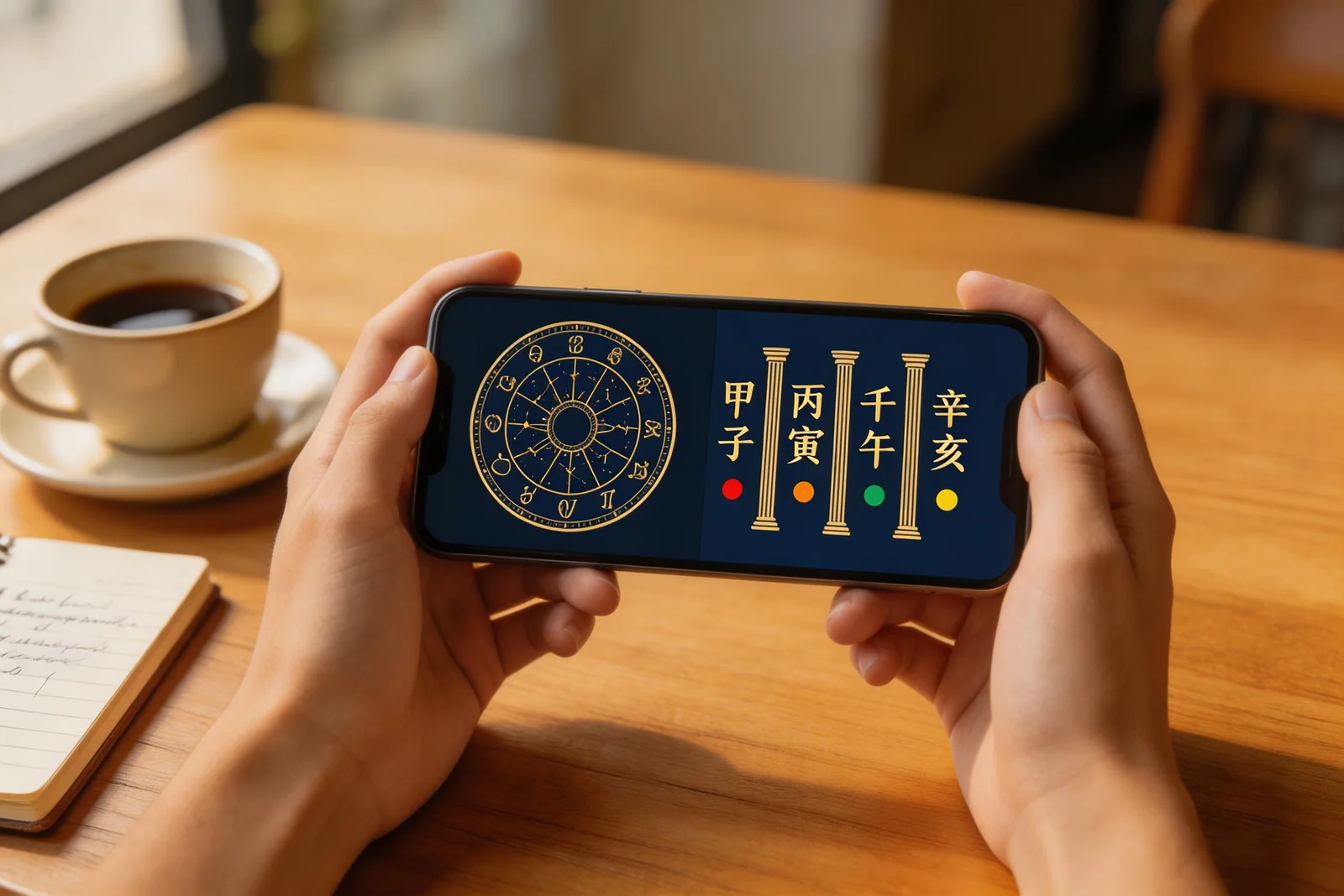
The temptation with this kind of comparison is to declare a winner. To say one system is more sophisticated, more accurate, more worth your time.
I'm not going to do that. The zodiac has done real work for real people for a very long time. The fact that it's simple enough to print on a coffee mug is part of why it's survived — accessible systems endure.
What I'll say instead is this: if you've gotten everything you can from your sun sign and you're curious what's underneath it, saju is the natural next step. Not because it replaces the zodiac, but because it's asking a different question with a sharper instrument.
Your sun sign tells you something about the month you arrived. Your day master tells you something about the specific day — and then your chart builds outward from there, describing the elemental pressures and supports that shaped how that day-master energy actually developed in you.
Same starting premise. Much higher resolution.
At Qiora, you can see your Four Pillars free. Find your day master. See how your elemental distribution compares to what you might expect from your zodiac sign. If you want a walkthrough of how to read what comes back, this walks you through it. They might align more than you'd think. Or you might find that the thing you always felt was missing from your horoscope is sitting right there in your birth chart, in a language nobody had translated for you before.
Your sign told you what month you arrived. Your chart tells you who was there when you did.
Takes less than a minute · No signup required
Saju readings are meant for self-reflection and personal growth — not as a substitute for professional financial, medical, or legal advice. Your choices always shape your life more than any chart can.
The masters on Battle of Fates aren't reading your energy. They're reading a chart — eight characters derived from your birth data. Here's how to see yours in under a minute.
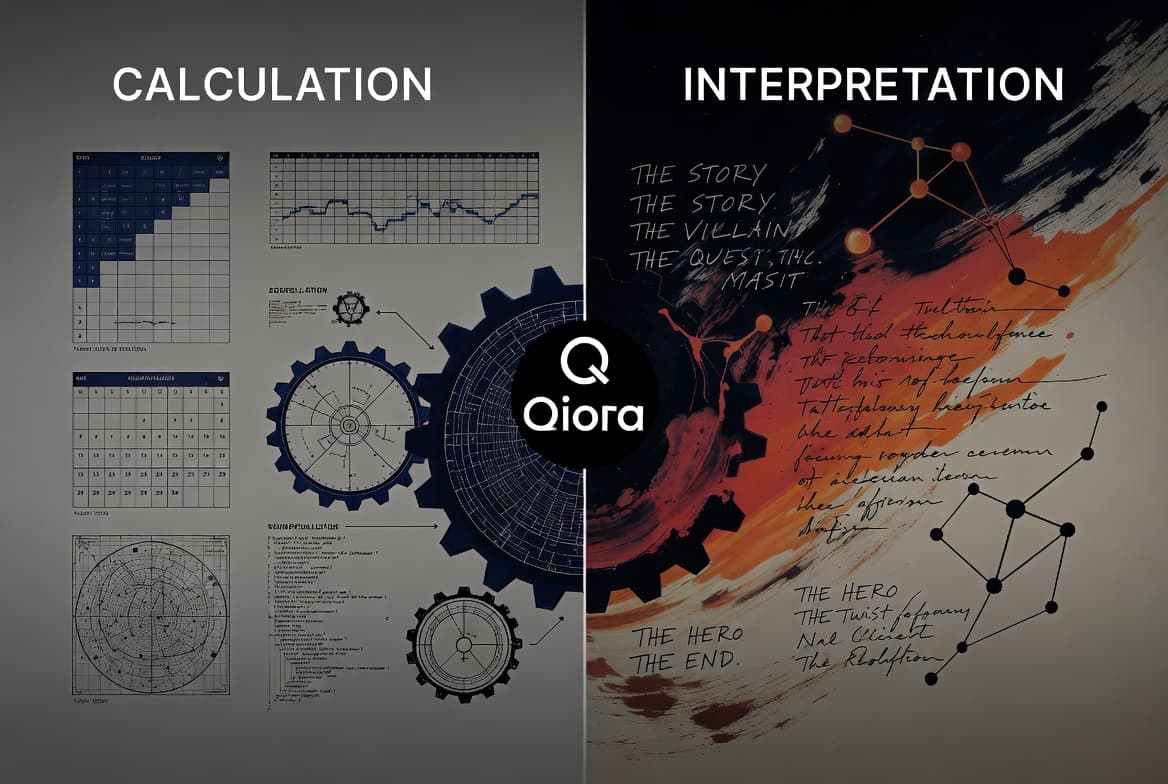
AI writes eloquent Saju readings — but can't reliably calculate the Korean Four Pillars birth chart behind them. Here's how Qiora solves that with a precision manseryeok engine and AI interpretation working together.

Most people open a compatibility report, read the summary, and close it. The summary is the least useful part. Here is what the rest of it is actually telling you.