Love, Gunghap, and Close Relationships
Learn how Korean Saju approaches compatibility without turning two charts into a pass-or-fail test.
Gunghap (궁합, 宮合) is the Korean practice of comparing two people’s charts. Traditionally it has been associated with marriage, family approval, and choosing an auspicious path forward. Today it may arrive much earlier, somewhere between the second date and checking whether both people still reply to messages.
Compatibility is one of Saju’s most loved uses and one of its easiest places to cause harm. The method should create better questions, not a cosmic pass-fail stamp.
Gunghap has a social history
Marriage in premodern Korea joined households as well as individuals. Families could exchange birth information, consult a practitioner, and consider auspicious dates alongside status, resources, lineage, and practical arrangements. The chart comparison belonged to a larger social process.
Modern relationships are more varied. People date without planning marriage, marry without family approval, build chosen families, remain single, remarry, co-parent, or form partnerships that older manuals barely imagined. Gunghap remains alive because the desire to understand relational patterns remains alive. Its ethical frame needs to live in the present too.
This means an old spouse correspondence is not a command about who must marry whom. A Wealth Star or Authority Star can describe relationship functions without defining gender, sexuality, or family legitimacy.
Two whole charts enter the room
Each natal chart remains a complete structure before comparison begins. Its Day Master has its own support and pressure, its Ten God families have different levels of access, and its patterns of expression, duty, conflict, and recovery already exist. Gunghap asks what happens when those two structures meet.
Skipping this order creates false simplicity. Water may support one person’s Wood Day Master while overwhelming another person’s already flooded structure. Strong Authority may feel stabilizing to someone who wants clear commitments and constraining to someone whose chart is already carrying heavy pressure.
Compatibility is not a substance one person possesses. It is a pattern made between two systems.
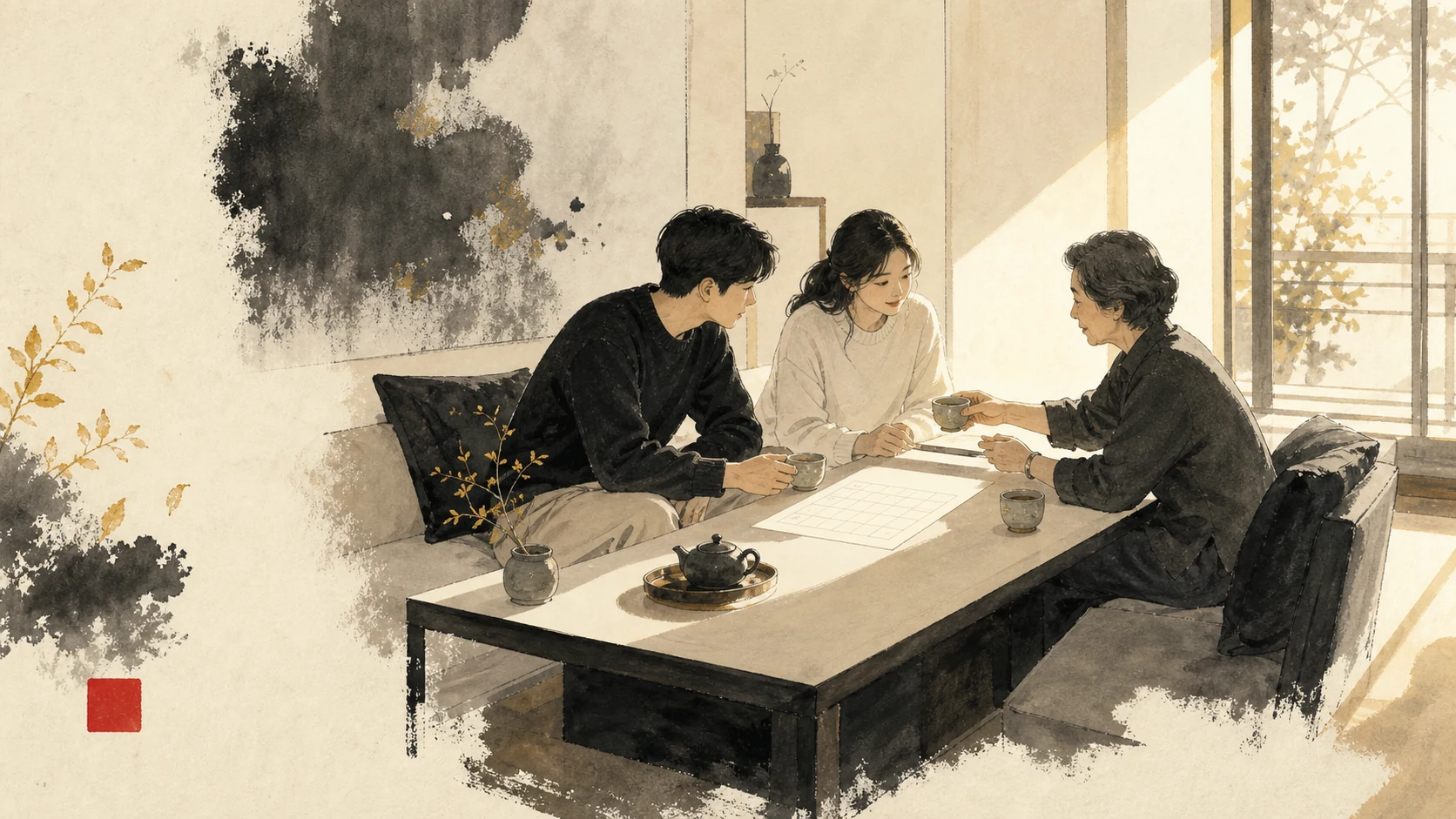
What a careful comparison can examine
A complete Gunghap reading may consider several layers.
Day Masters show the elemental relationship between the two reference points. One may produce, control, or share the other’s element. This gives a first description of energy exchange, not a relationship grade.
Day Branches receive attention because they belong to the Day Pillars and are traditionally associated with close partnership. Combinations, clashes, or shared elements between them can become relevant. No single Day Branch pair proves marriage quality.
Ten Gods across charts show how one person’s characters land in the other person’s relationship map. The same Stem can become Resource for one partner and Output for the other. This helps describe why the exchange may feel different from each side.
Season and strength show capacity. A person may enjoy what the other brings in theory but lack room for more of that element under current conditions.
Pillar interactions reveal which areas become connected or stirred. Year, Month, Day, and Hour positions add context, while the whole pattern decides importance.
Timing shows when a theme is louder. Two people can have the same natal comparison while experiencing the relationship differently as Luck Pillars and Annual Cycles change their available energy and priorities.
One exchange can feel different from each side
Cross-chart relationships are directional. Suppose one person has a Gye Water Day Master and the other has an Eul Wood Day Master. Water produces Wood. From the Water person’s point of view, Wood belongs to Output: energy moves outward into expression, care, problem-solving, or effort. From the Wood person’s point of view, Water belongs to Resource: something is received as support, information, protection, or replenishment.
The same exchange can therefore feel like giving from one side and receiving from the other. That does not make the relationship unequal by definition. It shows why a single phrase such as "Water supports Wood" is only the beginning. If Water is already depleted, producing more Wood may feel costly. If Wood is overwhelmed by too much Resource, additional support may feel intrusive rather than nourishing.
Day Branch interactions add another layer because the Day Pillar is closely associated with private life and partnership. A combination may make coordination feel natural, while a clash may keep the relationship active, mobile, or difficult to settle. Neither pattern overrides conduct, history, or the rest of the two charts.
Compatibility is not one score
Apps like scores because scores are easy to compare and screenshot. Human relationships refuse to be that tidy.
An easy elemental flow can reduce one kind of friction but cannot create honesty, consent, shared goals, or repair skills. A clash can require work, but it may also create attraction, movement, useful difference, or a relationship that changes both people’s lives.
A high score can encourage someone to ignore behavior that hurts them. A low score can make a healthy couple anxious about a problem they were not having. If a number cannot explain its criteria and limits, treat it as interface decoration, not destiny.
Any summary needs its explanation: which elements support each other, where pressure arises, and which timing layer is being compared. A conclusion without the path is hard to challenge and too easy to fear.
Technical patterns meet observable relationships
Elemental support can appear as practical help, emotional steadiness, shared information, or unwanted intervention. Authority may appear as dependable commitment or control. Companion themes may support equality or create competition for the same role. Output may make conversation lively or leave little room for silence.
The lived relationship decides which expression is present. A combination may suggest ease in joining plans, but only history shows whether plans are kept. Strong Resource may suggest care, but the receiver decides whether that care feels nourishing or intrusive. A clash may describe recurring movement, yet the couple’s way of repairing conflict matters more than the symbol’s dramatic name.
Attraction and sustainability are different questions
Some interactions create immediate charge. Peach Blossom or a dynamic clash may add visibility, fascination, or movement. That can help explain why two people notice each other.
It does not explain whether they can build a life together.
Sustainability needs capacity for boundaries, responsibility, expression, recovery, and shared reality. A relationship can be exciting and exhausting. It can be calm and emotionally absent. It can begin under one timing pattern and mature under another.
A good comparison separates attraction from the support of daily life, the need for individual room, the response to stress, and whatever is changing under current timing.
Timing is weather, not a verdict date
Luck Pillars and Annual Cycles can emphasize relationship themes. A new Authority or Wealth relationship may bring commitment, responsibility, social role, or practical concerns forward. A clash to the Day Branch may coincide with movement in close relationships or living arrangements.
Coincide does not mean compel. The same timing can describe meeting someone, renegotiating a partnership, changing a home, caring for family, or confronting one’s own expectations about intimacy.
Avoid telling someone that they must marry in a particular year or that a breakup is scheduled. Timing offers a window in which certain questions may become harder to ignore. People still choose how to answer them.
Family relationships need the same restraint
Saju is also used to think about parents, children, siblings, friends, and colleagues. Ten God correspondences and pillar positions can suggest recurring roles, but one person’s chart cannot diagnose everyone around them.
If a chart shows heavy Resource themes, we can ask how support and dependence work in the person’s family. We cannot declare the mother controlling without meeting her or hearing the history. If Companions are tense, we can ask about equality and rivalry. We cannot use the label to convict a sibling.
When reading a child’s chart, adults carry extra responsibility. "This child needs a clear transition before change" can guide care. "This child will never get along with the father" can manufacture the very distance it claims to foresee.
A chart cannot grant consent
Gunghap should never pressure someone into staying, marrying, leaving, having children, or tolerating unsafe behavior. It cannot excuse cruelty as "just a clash." It cannot make family preference more important than the people involved.
If there is coercion, violence, stalking, financial control, or fear, safety and professional support come before chart symbolism. A favorable combination does not make harmful conduct favorable.
The ethical question is simple: does this interpretation increase the person’s agency, clarity, and safety? If it replaces their experience with an astrologer’s certainty, it has lost the point.
Good Gunghap gives both people more language
At its best, compatibility reading names a loop the couple or family can already observe.
One person may seek certainty under pressure while the other seeks options. One may repair through conversation while the other needs quiet first. Neither mode is automatically wrong. Trouble grows when each interprets the other’s regulation style as rejection or control.
A useful reading makes the loop visible and asks what agreement could interrupt it. It leaves both charts intact. No one becomes the good element assigned to rescue the difficult one.
Gunghap can illuminate attraction, friction, resources, and timing. Love still requires ordinary human technologies: honesty, boundaries, patience, shared labor, and the occasional message that says exactly what it means.
Previous: Reading Personality Without Putting It in a Box
Next: Work, Talent, Money, and Opportunity